

316L Steel, Grade 2 Titanium, or Carbon: Which Case Material Is Right for You?
Choosing a case material isn’t just an aesthetic decision. It affects how your watch feels after a full day of wear, whether it irritates your skin, how it handles scratches over time, and what visual statement it makes. Here’s everything you need to know about the three materials we offer.
316L Stainless Steel: The Reference Standard
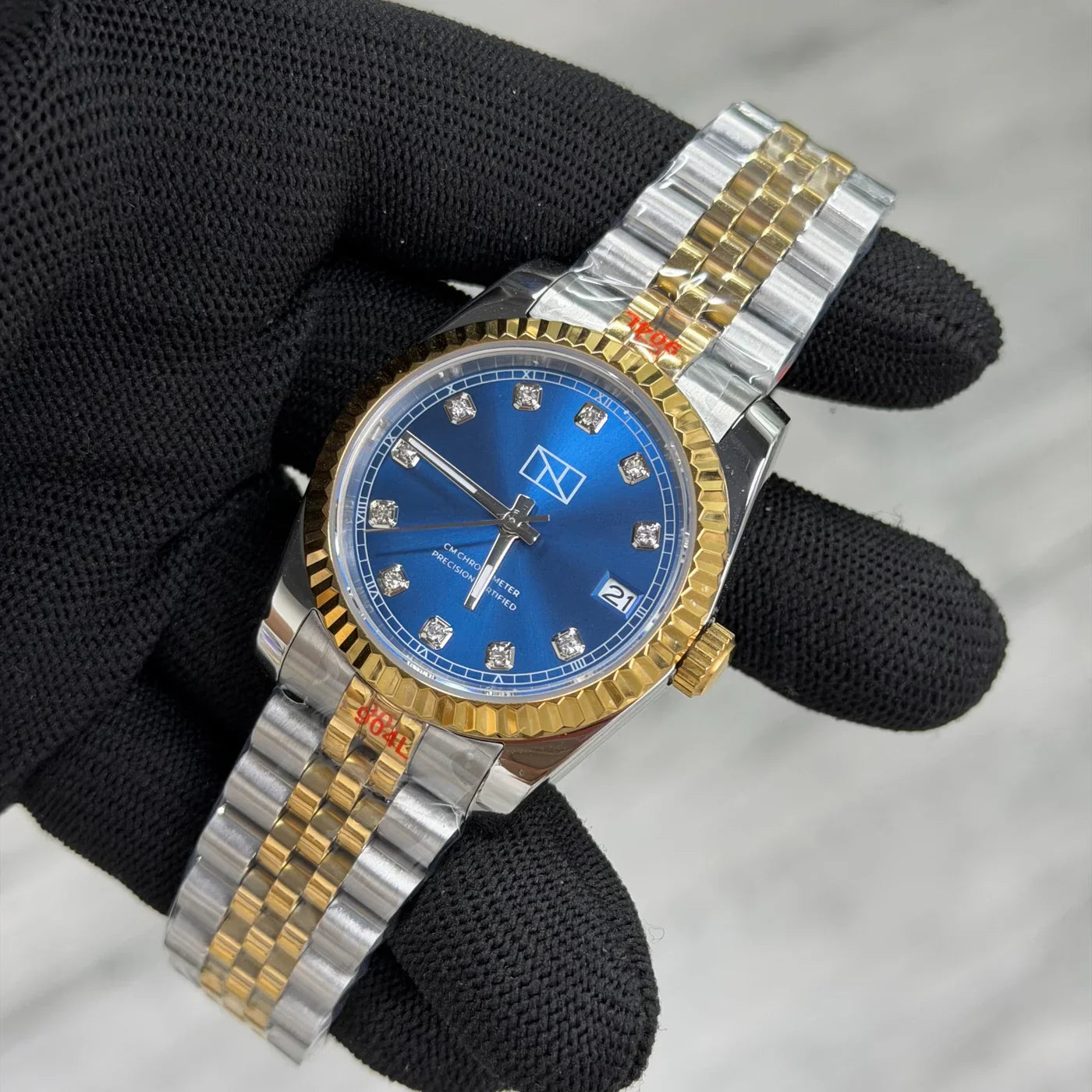
316L is the benchmark material for serious watch cases. It’s the same grade used by the world’s most respected Swiss watchmakers in their core and entry-level lines. The designation "L" stands for low carbon content, which translates to better corrosion resistance and cleaner, more stable polished and brushed finishes.
Key characteristics:
- Density approximately 7.9 g/cm³: a solid, reassuring weight on the wrist
- Excellent scratch resistance in brushed and polished finishes
- Outstanding corrosion resistance against salt water, sweat, and daily wear
- Can be re-polished or re-brushed by a watchmaker to restore original condition
- Contains a small percentage of nickel, a potential skin irritant for people with nickel sensitivity
Best for: Anyone who wants the classic feel of a proper metal watch. The go-to choice for first-time configurators and those who want versatility across all occasions.
Grade 2 Titanium: Lighter, Tougher, Purer
Grade 2 is commercially pure titanium, the same specification used in aerospace components and medical implants. This isn’t a marketing phrase. It means the alloy contains no nickel, which makes it genuinely and completely hypoallergenic. If your skin reacts to stainless steel watches or jewellery, titanium is the answer.
Key characteristics:
- Density approximately 4.5 g/cm³: roughly 40% lighter than 316L steel for the same case dimensions
- Corrosion resistance that surpasses steel in most environments
- Biocompatible by definition: zero nickel, safe for all skin types
- Develops a natural patina over years of wear (some find this adds character)
- Slightly more prone to hairline surface scratches than steel, but structurally more impact-resistant
Best for: People with sensitive skin, long-days wearers (10+ hours), anyone who has found 40mm steel watches too heavy, travellers who count every gram.
Forged Carbon: The Modern Material
Forged carbon is the newest addition to our lineup, introduced in 2026. It’s the material of Formula 1 chassis, high-performance cycling frames, and aerospace structures. At watch case thickness, it offers an extreme strength-to-weight ratio combined with a distinctive marbled texture that is completely impossible to replicate in metal.
Key characteristics:
- Ultra-light: lighter than titanium at comparable case dimensions
- Extremely rigid with excellent impact resistance
- Unique visual texture: a marbled pattern that makes every case subtly one of a kind
- Non-metallic: zero corrosion risk, no magnetic interference with the movement
- Darker, more technical aesthetic that pairs naturally with black, anthracite, or deep blue dials and bezels
Best for: Anyone who wants a watch that reads as modern and technical from across the room. Also a strong choice for active use, sport configurations, and those who prioritise maximum lightness.
Side-by-Side Comparison
| Property | 316L Steel | Grade 2 Titanium | Forged carbon |
|---|---|---|---|
| Weight on wrist | Heaviest | Medium | Lightest |
| Scratch resistance | High | Medium | High |
| Hypoallergenic | Partial | Yes | Yes |
| Corrosion resistance | Very good | Excellent | Excellent |
| Visual finish | Brushed / polished | Brushed / satin | Marbled matte |
| Re-polishable | Yes | Partially | No |
Our Recommendation
Ordering your first custom watch? Start with 316L steel. The weight, finish quality, and versatility are hard to argue with. If your skin reacts to metal watches, or you regularly wear one for a full day’s work, titanium is the upgrade that makes a real difference. If you want something that makes a visual statement and absolute maximum lightness, go carbon.
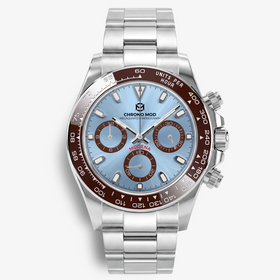
Steel is available on every model. Grade 2 titanium is offered on the DeptMaster and the GMT Dual Time, forged carbon on the Modena. The configurator shows the materials available for the model you are building.